
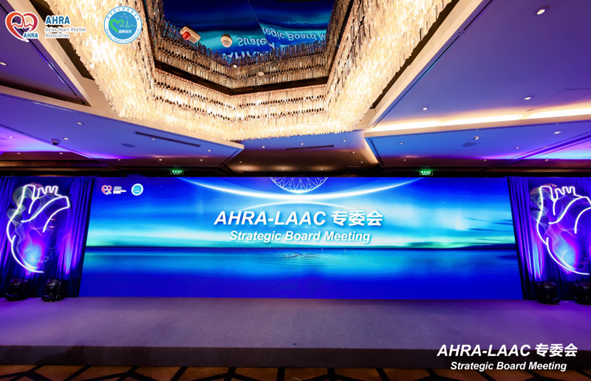
On August 31, 2024, the ACAS-LAAC Strategic Board Meeting was held in Beijing, bringing together members the Asian Heart Rhythm Association (ACAS) from countries such as China, Japan, and Singapore, as well as dozens of Left Atrial Appendage Closure (LAAC) experts and scholars. They engaged in intense discussions on hot topics in the field of LAAC, such as patient selection and postoperative follow-up. These exchanges and debates sparked brilliant academic insights.
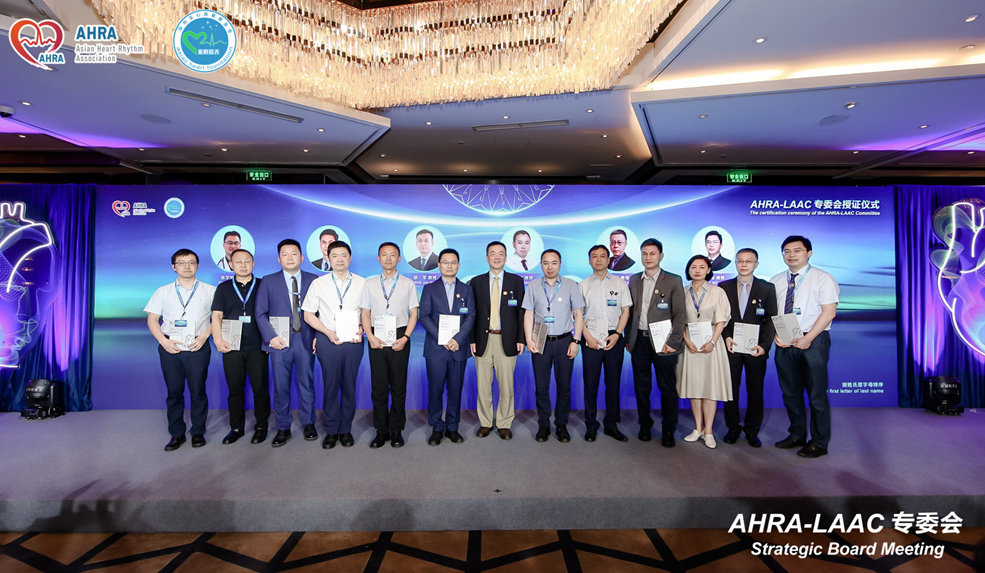
The opening session of the meeting was moderated by Professor Liao Zhiyong. ACAS Chairman Professor Yan Yao from Fuwai Hospital of the Chinese Academy of Medical Sciences (CAMS) delivered a passionate opening speech, and extended a warm welcome and sincere gratitude to the key figures in the field of left atrial appendage (LAA) from across China and to the leading physicians from Japan and Singapore. He said that Asian regions, particularly China and Japan, are witnessing rapid growth in the number of catheter ablation and LAAC procedures, with significant potential for further expansion. The establishment of the LAAC Committee plays a pivotal role in promoting academic exchange and case sharing. Professor Yan Yao expressed hope for continued strong collaboration with the industry and the ACAS to organize more events for exchange, sharing, and training in the future, aiming to improve the technical skills of LAAC physicians and better serve patients. The certification ceremony of the ACAS-LAAC Committee then took place, with Professor Yan Yao presenting the certificates to the inaugural ACAS-LAAC Committee members.
Part 1 of the Academic Session: Focusing on postoperative patient benefits
The academic session of the meeting was set up in a unique way to ignite participants’ enthusiasm for academic discussions by starting with an open-ended question that the audience could respond to using voting devices. Part 1 was moderated by Professor Liu Jun from the Shenzhen Fuwai Hospital. The question was to select the top concern after the LAAC procedure among device embolization, device-related thrombus, endothelialization, pericardial effusion, peri-device leak, and antithrombotic therapy.
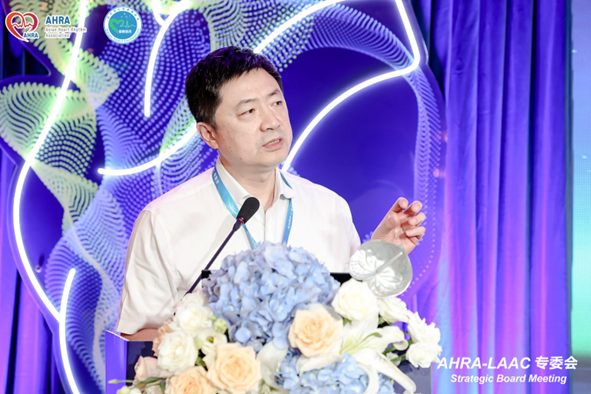
Professor Yang Bing from East Hospital Affiliated to Tongji University delivered a lecture titled “Post-operation Follow-up and Endothelialization Case Discussion”. He emphasized that effective intraoperative closure is just the beginning of LAAC; ongoing follow-ups and effective scientific management are essential to ensure the maximum benefit for patients. Postoperative CTA follow-up offers higher detection rates and sensitivity for peri-device leaks (PDLs), is flexible in application, and is more patient-friendly. Accurate interpretation of CTA images, based on HU values and HAT grading, allows for a better assessment of the degree of endothelialization and the occurrence of device-related thrombus (DRT). For patients with incomplete endothelialization or PDLs, it is important to consider extending the duration of anticoagulation therapy.
Part 2 of the Academic Session: Focusing on patient selection for LAAC
Part 2 was moderated by Professor Ding Ligang and also started with a question: What is the top priority regarding patient selection for LAAC? The options included: recurrent cerebral infarction, high risk of major bleeding, history of recurrent bleeding, strong willingness to choose LAAC, contraindication to long-term oral anticoagulation, high risk of thromboembolism (regardless of AF type), and after electrical isolation of the LAA.
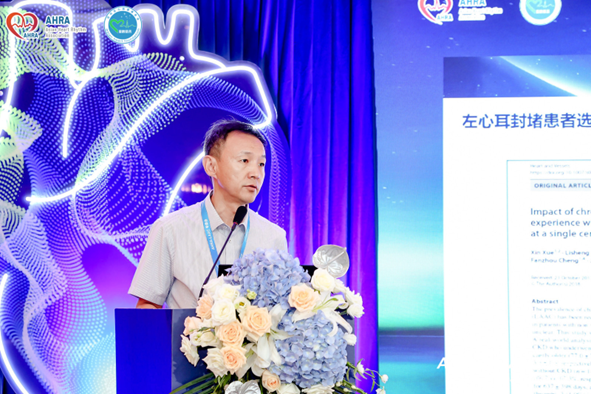
Professor Niu Guodong gave a lecture entitled “Patient Selection for LAAC from the Perspective of Consensus Updates in Guidelines”. He pointed out that after the Chinese Guidelines for the Diagnosis and Management of Atrial Fibrillation proposed Class IIa recommendation for LAAC, the first authoritative foreign guideline developed by the American College of Cardiology (ACC) also provided Class IIa recommendation. According to the guidelines, the indication for LAAC can be summarized as nonvalvular AF with a high risk of stroke (CHA2DS2-VASc score ≥ 2) and any condition of the following: unable to take anticoagulants, unwilling to take anticoagulants, or high risk of bleeding. Moreover, for LAAC, we should also pay attention to patients who have undergone PCI, the elderly, those with moderate renal insufficiency, those with pre-existing thrombus or severe sludge in the LAA, and those with a history of stroke. In addition, with the ongoing exploration of the procedures, LAAC can be used in combination therapy for AF patients with severe aortic stenosis, hypertrophic cardiomyopathy, mitral stenosis, or high risk of bleeding.
Part 3 of the academic session provided an opportunity for outstanding young LAAC physicians to communicate face-to-face with prominent experts, and the experts present enthusiastically answered questions from the representatives of the Young Observer Group, bringing this academic event to a whole new level.
In his concluding remarks, Professor Yan Yao pointed out that the establishment of the ACAS-LAAC Committee represents the formation of a leading force in Asian LAAC. Through active communication and exchange, we can further enhance our understanding of the procedure and improve our procedural skills. The Committee will also play a leading role in standardized development, actively training outstanding LAAC teams and collaborating with academic organizations on preparing consensus guidelines. We believe that under the leadership of the Committee, professionals in Asia can work hand in hand to serve Asian patients better and make their contributions in the future.